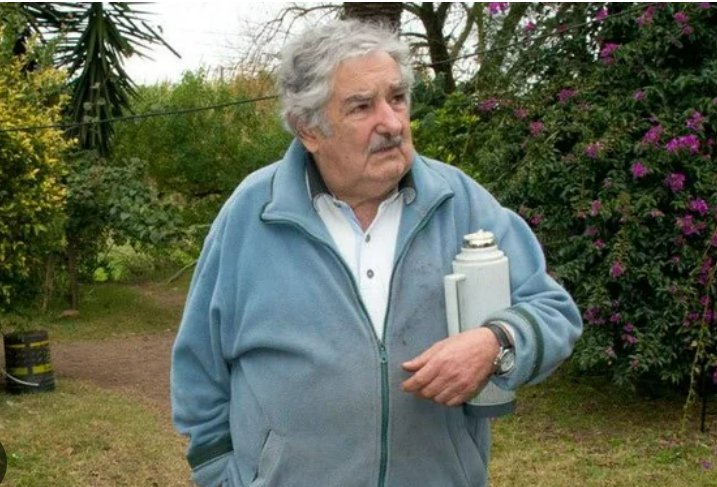

José Alberto Mujica Cordano, the former President of Uruguay from 2010 to 2015, is widely recognized as the “poorest president in the world” due to his extraordinary simplicity, humility, and dedication to public service. Unlike most world leaders who reside in lavish palaces and enjoy luxurious lifestyles, Mujica chose to live on a modest farmhouse on the outskirts of Montevideo, sharing his life with his wife and their three-legged dog, Manuela. He drove a 1987 Volkswagen Beetle, wore simple clothing, and consistently avoided material excess, showing the world that true leadership is not measured by wealth or possessions.
Born on May 20, 1935, in Montevideo, Mujica came from humble beginnings. He became involved in politics at an early age and was a key member of the Tupamaros, a leftist urban guerrilla group during Uruguay’s turbulent 1960s and 1970s. He spent 14 years in prison, enduring harsh conditions and spending long periods in solitary confinement. Despite this difficult past, Mujica emerged with a philosophy centered on freedom, humility, and service to society. His personal struggles shaped his belief that happiness and fulfillment do not come from material accumulation but from living a simple and purposeful life.
During his presidency, Mujica donated approximately 90% of his monthly salary around $12,000 to charities and social programs that supported poor citizens, small farmers, and entrepreneurs. This unprecedented act of generosity captured global attention and earned him admiration from people across all walks of life. Mujica frequently stated that he was not poor in spirit, emphasizing that true poverty is the result of excessive desire and attachment to wealth, not the lack of money. His down-to-earth lifestyle and candid approach to leadership made him a symbol of moral integrity in modern politics.
Beyond his personal simplicity, Mujica was a progressive leader who implemented policies that reflected his vision of social justice and equality. He promoted environmental conservation, supported the legalization of cannabis, and championed same-sex marriage, making Uruguay a model for progressive reforms in Latin America. His governance demonstrated that ethical leadership and social responsibility can coexist with practicality and humility, inspiring a new generation of leaders worldwide.
Even after leaving office, Mujica continues to live on his small farm, rejecting the perks of political fame. His life story resonates globally, serving as a reminder that wealth is not measured by material possessions but by generosity, ethical conduct, and a commitment to improving society. José Mujica’s legacy as the world’s poorest president highlights the profound impact that a leader with humility, vision, and compassion can have, proving that true greatness is rooted not in luxury but in freedom, simplicity, and service to humanity.