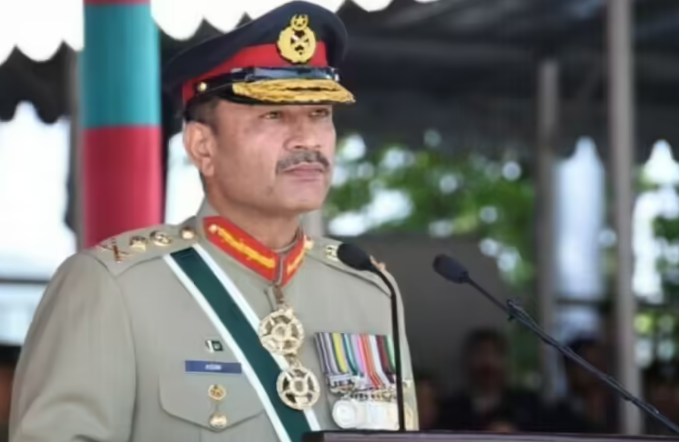

In a major political and military development, Pakistan’s government has introduced constitutional amendments granting unprecedented powers to Army Chief General Asim Munir following the military’s poor performance in the recent border escalation referred to as “Operation Sindoor.” The move, which follows widespread criticism of Pakistan’s defence preparedness, aims to strengthen central command within the armed forces but has sparked intense debate over the growing influence of the military in national governance. The proposed 27th Constitutional Amendment Bill seeks to amend Article 243 of Pakistan’s Constitution, which currently places supreme command of the armed forces under the President. Under the new framework, a new position titled Commander of Defence Forces (CDF) will be created, effectively placing the Army, Navy, and Air Force under unified command. This position would be held by General Asim Munir, who was recently promoted to the rank of Field Marshal, a title that the amendment will formally recognize under the Constitution.
According to reports, the amendment also aims to provide extended tenure protection to the CDF and could make the role independent of civilian authority, including the Prime Minister’s office. Officials in Islamabad argue that the changes are necessary to modernize the country’s military command system and ensure better coordination among the armed forces, particularly in light of lessons learned from the setbacks during Operation Sindoor.
However, critics and opposition leaders warn that the move represents a dangerous concentration of power in military hands, undermining Pakistan’s fragile democratic institutions. Analysts have pointed out that such constitutional changes could weaken parliamentary oversight, further blur the civil-military boundary, and entrench the army’s role as the ultimate power broker in Pakistan.
The amendment bill is currently under parliamentary review, and while it is expected to pass easily due to military backing, it has reignited long-standing debates about Pakistan’s governance model and the balance between democracy and military dominance.